
I had a phone call with a self-help author who wanted to help me with the self-publishing process of my book, Hocus Focus. He and I got off to a rough start, as I “poke the box” with sales pitches and identify known sales tactics as they’re used on me in an attempt to disarm the strategy and access the actual person I am talking to. It’s obnoxious and I should stop. I was on the phone with him in home depot and the conversation carried on as I purchased materials, got in my truck, drove to my clients and installed gutters. It was nice to have someone talking to me, even if they were only in it for a sale. He told me something like, “Your book will never be successful if you do it on your own.” I took offense to that and despite the claim that I was “Un-coachable,” I carried on a friendly conversation because it was nice to have someone to talk to.
When asked about what he was reading, and he told me he just finished The Miracle Morning and he had a list of 50 self-help books he was planning on finishing this calendar year. I asked him if he ever heard the phrase, “When you get the message, put down the phone.” I was being a total smart ass. I was also using him as a jumping off point for the dialogue I had been having internally. I was asking this question myself.
Why am I so prone to desire improvement? Could this reveal that I have always struggled with my “Enough-ness?” Did it all start with the ADD diagnosis at age seven? Being told as a child I was deficit, have I forever been trying to fill it back up? Where does it all lead? Am I setting myself up for a perpetual longing?
My social media algorithm regularly presents me with two polarities.
1- You are enough as you are. Rest—be content.
And
2- Wake up at 4am — magically make six figures with a vague online business. Buy this course, work your body into stone.
What is being implied by the constant recommendation to improve?
I have read dozens of self-help books. I have applied some lessons semi-permanently and some of them I have completely forgotten, but they are deeply embedded in the substrate of my subconscious, guiding the way I think and those thoughts lead to my actions. Do I have to keep reading these books until I feel like I have made enough money, conquered my challenges, released my beasts and become full and abundant?
I think something happens when we read self help. Something in our brains telling us we have achieved all our goals. We are simulating achievement by imagining it. We are getting off on the idea that we will be better.

We fantasize that our morning routine is stellar, we achieved our goals, our health is ubermenchan and our wisdom clear and available. By attending the verbal pep rally of a charismatic author, describing how, “Not everyone can be successful, but you can be. You’re different from the other millions who have bought this book.” Our visualization of this version of our self satisfies the lack lying deep inside us.
I have fallen victim to this many times over many years, and just like all the authors have advised, I haven’t given up on my white whale goals. Maybe I’m a little bitter that it hasn’t worked. I would say it’s even backfired a few times and deluded me into leaping, expecting a net to appear, and hitting the dirt.
I think these books have their place. I think everyone should read a few at a few points in their lives. The authors want to help, and you get out of any book what it is you need. Maybe it’s also about learning to listen to yourself by learning to listen and trust yourself.
Julia Cameron’s The Artist’s Way changed my life for the better and, in reading the book, I revealed parts of myself that felt like they were waiting for her book to be unearthed. There are books that have certainly been instrumental in my growth. I am not saying one should avoid these kinds of books or that they lack value. Just thinking about that guy who reads 50 of them in a year. I think at a certain point; we should seek more specific books. But the general category of self help, self improvement self growth books, is over-saturated, full of grifters and it’s just a rehashing of Awaken the Giant within. I feel like there is enough in me to be inspired by a handful of them or so and I consider that at a certain point; we reach the point of diminishing returns and if you actually want to be better, more productive, spending all that time reading self-help books is taking you away from the adequacy you are looking for. When the sponge is saturated, wring it.
I used to be a non-fiction only snob and devoured memoirs while writing mine as research. I would profess pretentiously to people, “Why would I read something that isn’t true?” I would attest that, myself, a non-fiction person, when I read fiction, I can’t help myself from analyzing the intention of the author and their situation, looking to learn about the person wielding the pen rather than immerse in a false world of characters based in a fictional space.
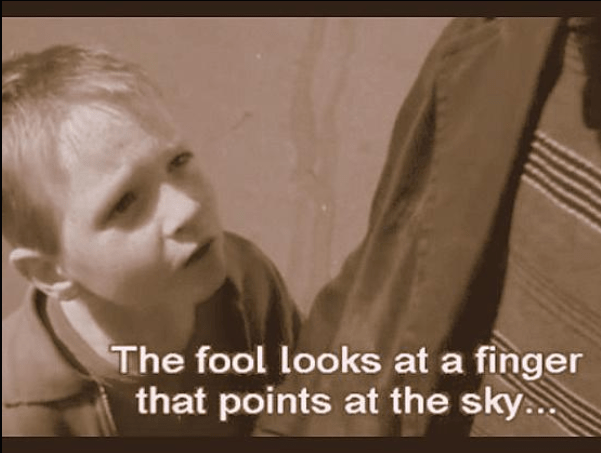
Chuck Palahiniuk suggested in his book about writing, Consider this, to connect your own protagonist to a classic archetype. I thought about myself as the protagonist of my memoir was me. I believed during my bike trip across the country I was Odysseus, a brave, resourceful, heroic dude. Then I read The Odyssey for fact checking and enjoyed it thoroughly. I learned about leadership, courage, resilience and also that I was not like Odysseus when I biked across the country. He wanted to go home. I wanted to leave it. Then I went further into literary classics and read Don Quixote on a hunch that he was the archetype I had mindlessly integrated with at the time of my bike trip.
“Oh fuck,” I thought, “I was this guy. Oh, how I was this guy.” I believed in myself a little too much. I made up an adventure nobody asked me to go on in theme of self proclaimed nobility, justice and righteousness. There was no external call to adventure, so I created one. I just wanted some danger in my life to feel alive. Odysseus fought for his country and journeyed home to save his family. I left my home to pedal past tumbleweeds and interview people about nothing outside of small town gas stations. Reading Don Quixote — I loved it. I am still wrapped up in classic literature. There’s a reason they’re classics.
As I read these masterpieces, I have to decode the work to find the message. This trains my brain to find the meaning, the life advice and the point as it applies to my unique experience of life, story and a self worth improving.
We can agree that self-help books are full of good advice and we all would love to take it. If not properly integrated, it’s just more fun facts. Something has to happen and outside from an experience in reality. Self-help books are aware of this concept and they beg you to integrate, to change, to wake up early, to make that phone call, etc… Sometimes it hits, but sometimes it misses. Knowing the truth isn’t always enough to live by it. Maybe some people just download self-help books and are flushed with improvement at these rates, but it is not my experience. I can’t just think and read my way out of a way of thinking. I have to do something.
I feel like the reality of these characters chosen to represent our human experience may be more helpful to me in this season in my life than endlessly rearranged iterations of, “You can do this,” and “Have a plan.” From tv, to movies and social media to books and then maybe I can stop looking for so many external representations of life and experience it. Also, the literature has incredible prose, something that is rare to come by in self help work.
I recently read a productivity book after a summer, fall and half a winter of classics. I just finished Deep Work by Cal Newport. Reading it provided that comfy fantasy. I would love to integrate the ethic he talks about in his book, but I feel like the specific methods only apply to him and his specific life and while I may be slightly influenced by the work and integrate some of it into my approach to existence, reduce phone time and empty some of his loaned tools into my choices and actions to fight against my ADHD and personal challenges merging with the world of work, I think the person who most benefited from Deep Work was Cal Newport.
I think a lot of these self-help books are contracts these individuals write with the world about their own commitment to improvement, their own methods that once published and known by all, they have enough accountability to live by them and be reading and observing their books, perhaps we are just an accountability tool for the author to make sure they remain vigilant about the expectation set by their own deliverance of their best selves they seek to ignite within us.
I am so pleased that I am receptive to why these works have been so instrumental in the relationship we, as people, have to the written word.
If you are interested in my memoir, Hocus focus: Coming of age with ADD and its medicines, click the title and consider picking up a copy. It’s my personal contribution to the human endeavor of writing, as well as my treatise on ADHD and its medications.
This year I am challenging myself to write 52 blogs. This is the first one. I am hoping it’s the worst one. I hope to improve upon this medium and am curious to see where this goes. I may not have made this commitment without all the self help I have read. Just like you may see in Hocus Focus, with my relationship to amphetamines, sometimes there is a resentment toward things that helped as we grow and change and look back and look forward. All at once.
I’ll keep reading self help when it feels appropriate and without desperation. No reason to draw hard lines. Just excited about finding guidance and wisdom in other things. Enjoying literature and reading rather than trying to take something from it and questioning what it is all about.
 R.L. Kramer
Leave a comment